
Creating culturally relevant experiences that reflect community voices and deepen engagement through authentic storytelling
Representation in the arts is often discussed in terms of visibility, who is on stage, whose work is shown, whose stories are told. But representation is more than visibility. It is about connection, authenticity, and trust.
When people see themselves reflected in the art they engage with, something deeper happens. The experience becomes personal. The barrier between the audience and the work begins to dissolve. Art shifts from something to observe into something to feel, to question, and to participate in.
For many communities, particularly those that have been historically underrepresented or under-resourced, this kind of connection is not guaranteed. Too often, arts programming is designed without meaningful input from the communities it intends to serve, resulting in work that feels distant, inaccessible, or disconnected from lived experience.
We believe that meaningful arts engagement starts with relevance.
That means working with artists who not only demonstrate technical excellence but who also bring cultural fluency, lived experience, and an ability to connect authentically with the communities they serve. It means designing programs that are not imposed, but shaped in collaboration with those communities.
In practice, this looks like meeting people where they are.
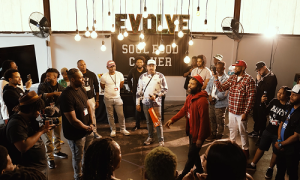 In our youth programming, for example, we partner with spoken word artists from Soul Food Cypher who use hip-hop, poetry, and storytelling as tools for teaching and engagement. These are art forms that are already embedded in the cultural fabric of the students’ lives. By using familiar modes of expression, instructors are able to create immediate points of connection.
In these spaces, students are not just learning how to write or perform, they are learning how to articulate their experiences, how to process their environment, and how to see value in their own voice. The classroom becomes a place of dialogue, reflection, and empowerment.
This is what representation looks like in action.
It also extends beyond the classroom.
Through programs like Filmer, we create platforms for artists to tell stories that reflect the complexity, nuance, and richness of their communities. These are not one-dimensional narratives. They are layered, personal, and often rooted in lived experience. By providing space for these stories to be seen and heard, we help shift whose perspectives are centered in the broader cultural conversation. 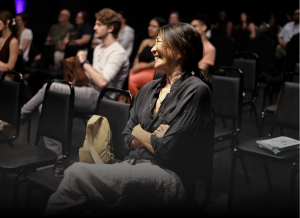
Representation also plays a critical role in building trust.
When communities see that their stories are being told with care, and that the people telling them share a genuine connection to those experiences, it fosters deeper engagement. Participation increases. Dialogue expands. The arts become a space not just for presentation, but for connection and exchange.
This approach requires intention.
It requires investing time in relationships, listening to community voices, and being willing to adapt programming based on what is heard. It also requires acknowledging that representation is not static; it evolves alongside the communities themselves.
At its best, representation in the arts does more than reflect reality; it helps shape it.
It creates space for voices that have historically been marginalized. It challenges dominant narratives. It builds empathy across differences. And it affirms that every community has stories worth telling and preserving.
This is why representation is not a secondary consideration in our work; it is foundational.
Because when people see themselves in the work, they don’t just engage with the arts.
They claim it.