
Exploring how creative expression can shape community identity, environmental awareness, and a more connected future
The future of Metro Atlanta, and communities like it across the country, will not be defined by infrastructure alone. It will be shaped by how people connect: to each other, to their environment, and to the stories that define where they’ve been and where they’re going.
At the center of that connection is the arts. 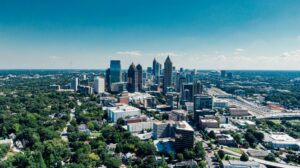
Art is more than expression. It is a way of preserving history, interpreting the present, and shaping the future. It allows communities to make sense of change, to honor legacy, and to imagine what comes next. When arts and culture are meaningfully integrated into community life, they become powerful tools for both identity and progress.
At The Fulton Institute, we believe the future of arts programming must live at the intersection of education, culture, and environment. This means creating experiences that are not only artistically compelling but also rooted in place, reflecting the histories, landscapes, and lived experiences of the communities we serve across the Southeast.
One of the clearest examples of this approach is our work with the Atlanta Quilt Festival.
Quilting, as an art form, has long served as a method of storytelling, preserving cultural memory, documenting social movements, and reflecting generational knowledge. Through the Atlanta Quilt Festival, these traditions are brought into contemporary conversation. Exhibitions centered on themes such as civil rights, African American resilience, and even banned books demonstrate how art can carry both cultural and civic significance.
Hosted at the Southwest Arts Center, the festival is more than an exhibition; it is a community gathering space for residents across Metro Atlanta. Through workshops, lectures, and hands-on programming, participants are invited not only to observe, but to engage. The act of quilting becomes a bridge between generations, connecting past narratives to present-day experiences and future possibilities.
This is where arts, culture, and environment intersect.
The environment is not only natural, but it is also social, historical, and cultural. It is the context in which people live, create, and relate to one another. When art reflects that environment, it deepens understanding and strengthens connection.
At the same time, this work is deeply tied to youth engagement.
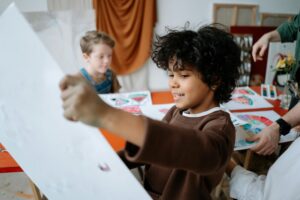 The Fulton Institute recognizes that investment in young people today directly shapes the health and resilience of communities tomorrow. Through programs like BOOST!, students across Metro Atlanta are not only exposed to the arts, but they are given tools to interpret their world, express their perspectives, and see themselves as contributors to their communities.
When a young person learns to tell their story, whether through music, film, poetry, or visual art, they begin to understand their role within a larger narrative. They develop confidence, critical thinking skills, and a sense of ownership over their environment.
Over time, these individual shifts lead to broader outcomes.
Students who are engaged creatively are more likely to remain connected to their communities, to pursue opportunities for growth, and to contribute meaningfully to civic and cultural life. They become not just participants, but leaders, individuals who shape the future of their neighborhoods, their cities, and their industries.
This is the long-term impact of arts investment.
It is not only about programming. It is about building ecosystems where creativity, identity, and opportunity are interconnected.
The Fulton Institute is working to expand this vision through programs that bring people together across Metro Atlanta. From festivals and performances to educational initiatives and public programming, each effort is designed to create spaces where community members can engage with art in ways that feel relevant, accessible, and transformative.
Looking ahead, we envision a future where:
- Arts and culture are central to community development
- Environmental awareness is integrated into creative expression
- Young people are equipped to lead through creativity and innovation
- Local stories are preserved, elevated, and shared across generations
Because the future is not something that simply happens.
It is something that is shaped by the stories we tell, the voices we elevate, and the investments we choose to make today.
Through the intersection of arts, culture, education, and environment, The Fulton Institute is helping to build a future that is more connected, more reflective, and more resilient, for Metro Atlanta and beyond.